By Arthur Lacau de Sá — Founder, Vocalist, and Bassist of Khaos Purposes
In the heart of Rio Grande do Sul, where the fields breathe history under the pampas wind, unfolds the saga of the DE SÁ and LACAU families — a story made of land, voice, faith, and destiny.
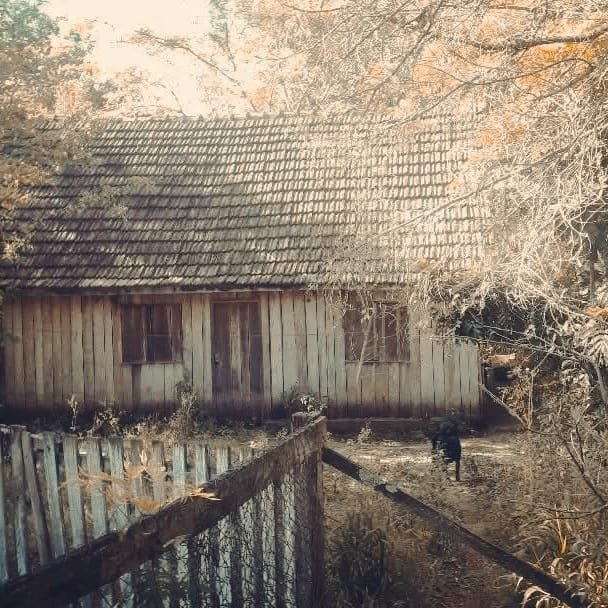
The lineage begins with PEDRO ALVES DE SÁ I, a free man of the 19TH CENTURY from southern Brazil of Portuguese noble origin, patriarch of a generation marked by land ownership and rural authority, who owned and managed approximately 900 HECTARES of land in Santa Bárbara do Sul, in the state of Rio Grande do Sul, forming the enduring heart of the family’s agricultural life. From those vast fields emerged a house defined by work, authority, and permanence. He left four legitimate children: Pedro Alves de Sá, João Alves de Sá, Albino Alves de Sá, and Amélia de Sá.
His namesake son, PEDRO ALVES DE SÁ II, born approximately in 1896 according to the oral testimony of his grandson, DILSON ALMEIDA DE SÁ — later transmitted to his son — ARTHUR LACAU DE SÁ, Pedro Alves de Sá II’s great-grandson and the one who now writes this saga, stood as the living continuation of his father’s name and presence, Pedro Alves de Sá I.
Pedro Alves de Sá II was an imposing figure: deep blue eyes, completely white hair and beard, and a white horse almost as bright as him — a silhouette remembered against the open horizons of the pampas. Throughout his life, he upheld the rural authority and agricultural legacy entrusted to him, preserving the family’s standing across the lands that bore their mark. Upon the division of the estate, he inherited approximately 225 hectares in the same locality, alongside his three legitimate siblings, thus ensuring the continuity of the family’s territorial and historical presence in Santa Bárbara do Sul — at that time still a district of Cruz Alta, long before its political emancipation and elevation to municipality — where the name de Sá remained rooted in the soil, in memory, and in lineage.
According to the same oral account preserved by Dilson Almeida de Sá and transmitted to his son Arthur Lacau de Sá, Pedro Alves de Sá II had six legitimate children: Osvaldo Alves de Sá, Henrique Alves de Sá, Olívio Alves de Sá, Amazílio Alves de Sá, Joaquina de Sá Monteiro, and Adelaide Sá de Almeida. Among them, AMAZÍLIO ALVES DE SÁ — born in 1918 — would become the father of DILSON ALMEIDA DE SÁ and the grandfather of ARTHUR LACAU DE SÁ, thus forming the direct bloodline through which this narrative now flows.
All of his legitimate children were raised upon those same lands, working from an early age in cattle breeding and in the rhythms of family agriculture that sustained both household and name. Only after Pedro Alves de Sá II’s death in 1973 did each son and daughter receive what was theirs by right through the formal division of the estate. However, in the case of Amazílio Alves de Sá — grandfather of Arthur — fate would take a different course: Amazílio was a gambler, addicted to gambling, and ended up losing everything little by little in the bets that consumed him. After the death of his father, Pedro Alves de Sá II, a large portion of Amazílio’s land was donated by him to the SEVENTH-DAY ADVENTIST CHURCH — estimated between 80 and 100 hectares, according to the oral account of his son, Dilson Almeida de Sá, to his grandson, Arthur Lacau de Sá — giving rise to the ACAMPAMENTO ADVENTISTA DO SÉTIMO DIA DE SANTA BÁRBARA DO SUL (SEVENTH-DAY ADVENTIST CAMP OF SANTA BÁRBARA DO SUL), still visited by generations of the very family that once owned it. Thus, the name of AMAZÍLIO ALVES DE SÁ remains forever woven into the land — not by what he lost, but by what ultimately endured.
On another branch, the story connects to another free man: ANTONIO JOSÉ DE ALMEIDA, also a farmer and landowner, whose father was a free man, indicating a legitimate lineage and inheritance. He married MARIA POLIDORO, of Italian origin. Together, they had VERGILINA DE ALMEIDA — also born in 1918 — a strong and maternal woman who would become Amazílio’s wife. It was from this union between the rural Portuguese noble lineage of the Alves de Sá and the Portuguese and Italian roots of the Almeida and Polidoro families that Dilson Almeida de Sá was born in 1945 — heir not only to the history of his land but also to his voice.
Dilson Almeida de Sá, son of Amazílio and Vergilina, was a First Lieutenant in the Brigada Militar (the Military Police of Rio Grande do Sul) and a Christian opera singer. He inherited and passed on the firm Portuguese and Italian vocal tone that Maria Polidoro bequeathed to the family’s bloodline. But his contribution went beyond his vocal gift: Dilson was the one who taught sacred music and chant to his children throughout their lives, starting at the Seventh-day Adventist Church. In a family environment, he, his wife Vera, and their two sons — Arthur and Gabriel (born in 2003 and 2005, respectively) — formed a family choir. Arthur’s first musical contact happened through hymns sung by family and churchgoers, and his first guitar teacher was Reinaldo Gomes, when Arthur was 8 years old.
In 2022, following his passing from natural causes, he was posthumously promoted to Captain — and thus he will always be remembered.
On the maternal side of Arthur Lacau de Sá, rises the Lacau lineage — a name of Occitan soil, born in the historical lands of southern France, where language, nobility, and regional identity long predated the modern French state. From that ancestral ground in Occitania, a single root of the Lacau tree extended across centuries, its branches dispersing lightly yet persistently across the Atlantic world.
The maternal grandfather of Arthur, ASTROGILDO ALVES LACAU, was the son of FRANCISCO DA SILVA LACAU, inheritor of that rare and enduring surname. The global scarcity of the name is not poetic exaggeration but statistical fact. According to the official 2014 surname distribution data published by Forebears, France remains the undisputed center of prevalence, with 532 recorded individuals bearing the surname Lacau. This confirms both its French origin and its demographic concentration in its ancestral homeland.
Beyond France, the name appears only in modest numbers. The United States records 101 individuals, while Brazil follows immediately with 100 — meaning the United States has exactly one more person surnamed Lacau than Brazil. When Canada is included, with 3 recorded individuals, the entirety of North America totals 104 — only four more than Brazil alone. Other countries show even smaller figures: Venezuela (47), Romania (32), Argentina (22), Spain (12), England (3), and Norway (2). These numbers underscore not expansion, but rarity — not diffusion, but preservation.
Despite this geographical spread, the limited global incidence strongly suggests a common ancestral trunk. The Lacaus of Brazil, the United States, Canada, and elsewhere are not separate origins, but distant branches of the same Occitan root. The Atlantic did not divide the lineage; it merely redistributed it. Every Lacau, wherever found, ultimately traces back to that original southern French stock, making all bearers of the surname distant relatives within a singular genealogical continuum.
The surname’s historical presence is also reflected in recorded figures of cultural and intellectual distinction, with notable individuals such as Georges Loustaunau-Lacau (1894–1955), French army officer and politician; María Hortensia Lacau (1910–2006), Argentine pedagogue, writer, essayist, poet, and educator; and Pierre Lacau (1873–1963), French Egyptologist and philologist.
Thus, the Lacau lineage stands not as a widespread surname diluted by numbers, but as a rare and traceable thread woven from medieval Occitania to the modern Americas — scarce in quantity, enduring in identity, and unified by a common ancestral root.
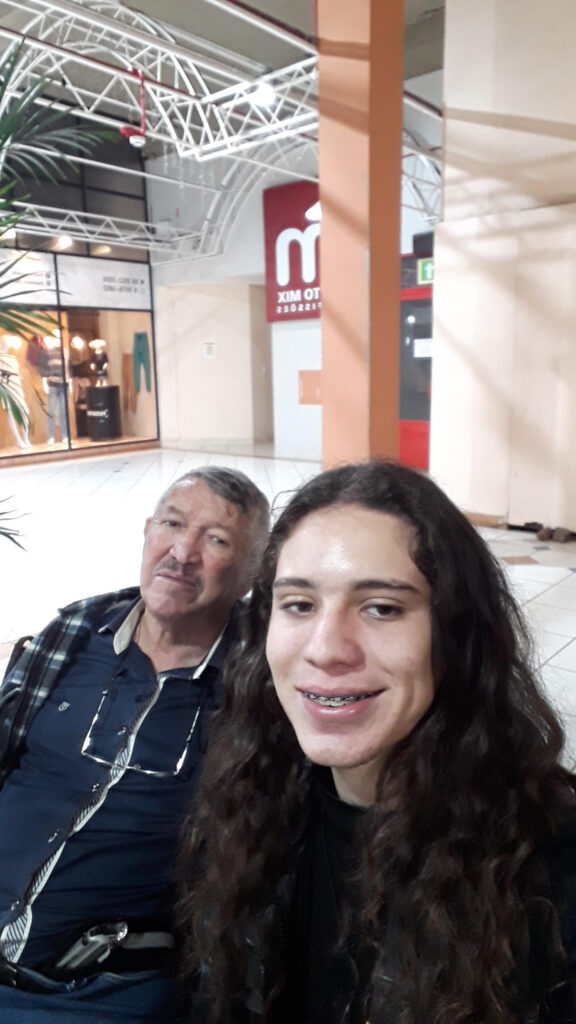
It was from this lineage that VERA DE MELLO LACAU was born, who joined Dilson and together continued the legacy. From their union was born Arthur Lacau de Sá, one of the two brothers who carries the voice of Dilson Almeida de Sá today, and his own, marked by high notes influenced mainly by Chris Cornell and Axl Rose. He often says:
“When I sing low, it is my own father that resonates; when I sing at the height of the heavens, I am myself.”
His youngest brother, GABRIEL LACAU DE SÁ, also carries this vocal heritage, sharing with Arthur the chorus of the last track on Khaos Purposes’ debut EP Slumber Night, released in April 25th, 2025 — Gabriel as the deep voice and Arthur the smooth one — showing that Gabriel too has this voice.
It was also his father who (accidentally) introduced him to Chris Cornell.
When Chris died in 2017, Dilson saw the news on Globo News, called his son to the living room and said, laughing:
“This is the fate of those who have long hair, you see?”
Arthur would truly get to know his music the following year, watching the music video for Like a Stone. In other words (“Hold my hand 🎵”, as Frank Sinatra would say), if it weren’t for his father, he might not have wanted to sing high notes either.
R.I.P. CAPTAIN DILSON ALMEIDA DE SÁ
1945 – 2022
Leave a Reply